Unintended Consequences
The BC Legislative Assembly is back in session and on Tuesday the Government introduced the budget.
In the last couple of years the Government seems to have been unusually short-sighted regarding the introduction of new legislation and Government policy (see: here and here). This is not to say that it is only a BCLiberal issue. The NDP made poor policy and legislative decisions with regularity too, but their path was less revolutionary despite their ideological underpinnings.
We are not political and we cannot be pigeon-holed to any ideology. Paul made phone calls for the provincial NDP in Alberta, volunteered in three elections for the BCLiberals, supported the federal Liberals and supported and voted for Joe Clark’s Progressive Conservatives while a student in Quebec. Sarah and Kyla are both left-leaning, but with a libertarian slant that runs afoul of conventional dogma. Jason always writes in the name of his candidate: Brisco of Zorbon. Mr. Zorbon has yet to become a fixture in BC politics. We all believe in the Charter of Rights and we are calling for a national holiday in honour of the Charter.
Our criticism of the Government is not based on ideology. And we are not advocating for a political party. To us it seems that the current Government is desperate to make a splash to save themselves from a wipe-out in the next election. And they do not seem particularly insightful concerning the consequences of their proposals. Which is why they are offering revolutionary proposals which we expect will have unintended consequences.
Revolutionary political change is foolhardy. But we know most politicians have not bothered to read Burke.
In the budget, the Government has outlined a $10,000 gift to first-time home buyers purchasing new homes. The purpose is to to appease the home builders and kick-start the flagging construction industry in the Okanagan where the economy is struggling and home prices seem to be in a slide. The ostensible purpose is to assist first-time home buyers to buy a house. The result will be a taxpayer funded subsidy to the construction industry that will exacerbate a glut in housing. Young buyers will get in over their head and the glut will ultimately lubricate a slide in home prices.
What seems like win-win for the Government right now (using your tax money to buy the favour of young buyers and the construction industry) will cause nothing but grief in a very short time. And we get to pay for this because it is money out of BC Government coffers.
Unintended Consequences and the “New” IRP Legislation
The unsubstantiated rumour is that the RCMP have written the new law to replace the failed IRP legislation. The RCMP spend a lot of time reading this blog. We expect that they have taken some points from it. It is frightening to think that the job of drafting legislation has been outsourced to the police. But it would not surprise us.
In any event, the law will need to be introduced, debated and voted on before the end of May because the last day the Government sits before the summer break is May 31. So it is safe to assume that they will introduce the new legislation within the next couple of weeks. And because it probably will not be much better thought out than the last IRP legislation, we expect there will be unintended consequences.
As soon as we get more information about the content of the new law, we will provide our analysis here.
We hope that the NDP will force a proper debate on the legislation. Remember, they too voted for the much maligned IRP scheme that will cost taxpayers many millions before it is sorted out.
IRP Update for Those Who Missed the 7-Days to Dispute
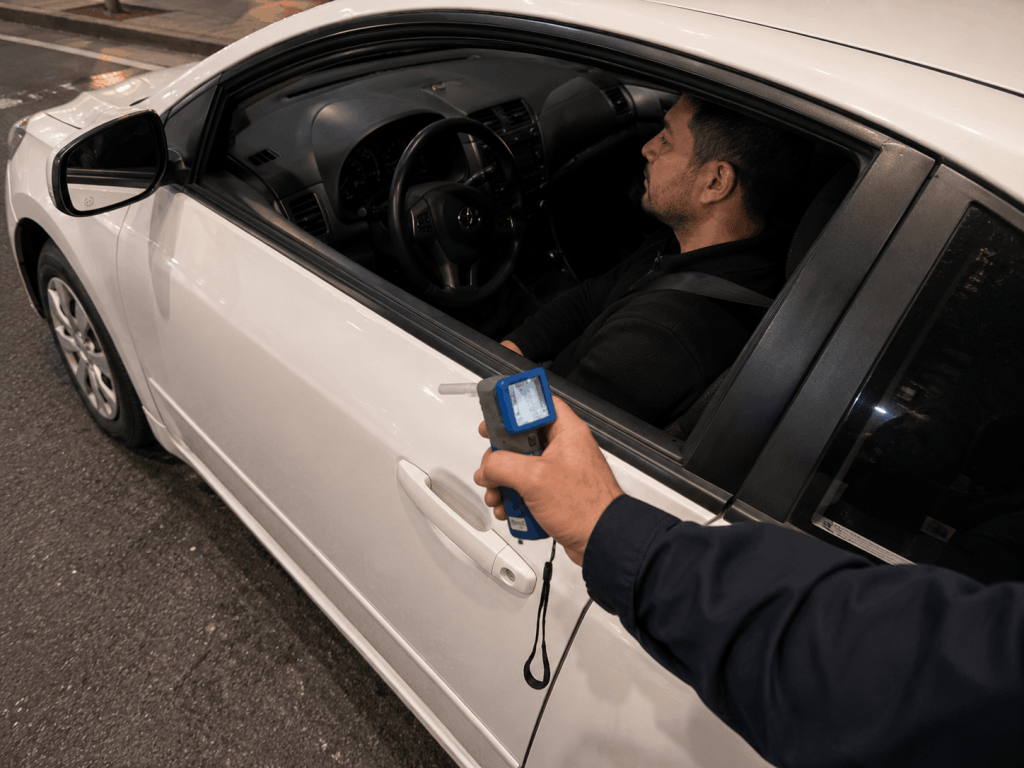
If you received a 90-day IRP for Fail and you are still not back on the road due to the Interlock or Responsible Driver’s Program, give us a call.
A great number of people received a 90-day Immediate Roadside Prohibition for Fail and did not file a dispute of the IRP at ICBC Driver Services within 7-days from service of the Notice.
When the law was found to violate the Charter of Rights by the BC Supreme Court in November, we felt that all of the IRPs should be lifted to avoid further punishing people with an unconstitutional law. Of course the Government disagreed and took the position that they should be able to simply deal with this through the OSMV and by writing new legislation.
The matter was left in limbo until June. We expect that in April or May we will see what the Government plans to propose. One thing we expect is that the Government will argue each point every step of the way.
We have been of the view that because we could apply to Court and get an interim stay of the IRP, everyone should be entitled to an interim stay. This would avoid a flood of petitions. But different people fall into different categories. For example, there are the people who did not file for a review within the 7-day window.
We could have filed Petitions right away for people in this situation. We could anticipate, however, that the Government would take the position at some point that because these individuals did not file for a remedy at the first stage, i.e. the OSMV, they were disallowed from seeking a remedy at Court. To head this off we first wrote to seek extensions of the 7-day period.
When the OSMV did not render decisions, essentially blocking our clients from obtaining a remedy, we filed to get a Court order to make them render decisions. And then the decisions started coming and our fax machine was busy for a few days.
The next step was that we filed Petitions to appeal those decisions so we could have the IRPs put aside until the matters in Court were resolved.
Where we are now
Because it is absurd to make everyone write for an extension, lawyers for the Government have now agreed that we can bypass this first step and simply file the Petition without first having a decision from the OSMV to appeal.
There is a downside risk to skipping the first step of requesting an extension to file for review. The Government may later argue that petitioners cannot obtain a remedy from the Court because they did not dispute their matter at the first venue.
Bearing in mind the duration of time since the initial ruling in Sivia, the test to seek an extension may prohibit this remedy in any event. Simply put, to seek an extension of the 7-day appeal period you need to be reasonably prompt in doing so. Now that it is February, an extension request may not be viewed as reasonably prompt.
So we are now advising people to consider skipping this first step so that they can get their license back right away. We are filing Petitions without first seeking a remedy from the OSMV. We are skipping the OSMV, despite the potential pitfalls, because at this point in time it makes less sense to request an extension of the 7-days.
If you want us to file the Petition for you so you can get your license back while all of this is dealt with in Court, give us a call.
Careless Storage
Careless storage of a firearm can get you a few years in prison.
We only mention this because the Victoria Police Department is missing a shotgun. It was stolen, lost or misplaced. Along with a bunch of riot equipment. Missing.
We do not expect that the police will investigate themselves for the unsafe storage of a firearm, and it is not why we bring it up. It is yet another example of bungling police.
That police officers make mistakes is a fact. That police officers are dishonest is also a fact. Some may be more honest than the general population, but the police still make mistakes and tell lies just like everyone else.
The Immediate Roadside Prohibition scheme was founded on the false assumption that the police are always honest, that they do not make mistakes and that their equipment is always functioning perfectly. This false assumption is threaded through the scheme. It is the reason you are not permitted to have the police answer any questions at your hearing. It is the reason that the Government concluded that 30 minutes is all you would be allowed for your hearing. It is the reason that they obstruct attempts to access further disclosure.
It seems pathetic and strange to us that literate adults, people who probably read newspapers and have seen the litany of police screw-ups in this province, could have supported a scheme that does not permit the accused to properly challenge the evidence.
In any event, the police make mistakes, they lack objectivity and sometimes they lie.
Which brings us to the issue of charge approval.
The same Government that brought you the IRP scheme now wants to hand the charge approval process over to the police. We suspect that the decision has already been made, but the plan is to do some consultation to avoid an HST-like scandal. It is what the police want, and they seem to get whatever they want in our current political climate. What does it mean for people in BC?
Right now the police in BC forward their files to Crown Counsel where a prosecutor will review the evidence and make a decision concerning whether to approve a charge and what the charge should be. The prosecutors do their best to be objective. The police evidence is usually given significant weight in their review of the file, which is not inappropriate.
The good thing is that someone who is not involved in the investigation and who understands how evidence unfolds in court ultimately makes the decision whether there is a substantive likelihood of successful prosecution. So bad files rarely make it to court. Prosecutors approving charges is a small layer of bureaucracy that saves taxpayers millions in futile or wrongful prosecutions.
So what this means for British Columbians is that you will have a greater chance of being wrongfully prosecuted and your tax money will be used to prosecute cases that should never get to court.
We see that the Government is once again (naively) going down a certain path because they do not understand the implications of a policy decision.
We understand that the Victoria Police are hard at work lobbying for this change. We would advise the Victoria Police to rather spend their time finding their lost shotgun.
Hard Work
From time to time we hire private investigators to assist us and all are former police detectives. One common thing they tell us is that they did not know what hard work was until they had to produce results for a client. Policing, we are told, is a lot of drinking coffee and socializing and then wondering why the files are stacking up.
Of course, there are many hard working police officers. But you cannot blame us for being cynical when so many in the Vancouver Police Department were recently been found to have spent their time at work cruising porn sites, emailing porn to one another and obviously looking at porn. Again, this is your tax dollars at work.
Now, it is important to note that police officers are not permitted to spend their time surfing porn — it is against the rules mainly because it supports a pervasive environment that has been historically hostile to women. Porn is out and meager discipline will follow for those who were caught. But what about Facebook? Or Lainey Gossip?
If VPD officers can while away the hours perusing porn, how many are whiling away their hours and your tax dollars on Facebook?
We have made numerous Freedom of Information requests to the VPD over the last year. In all but one case they told us that it would take too much time to accommodate our request and they they would not provide the disclosure we want unless we pay as much as $4900. Clearly, they are too busy surfing, emailing and viewing porn to disclose information that is in the public interest.
Another epilogue:
We would pay it, but we have no confidence that they would disclose the information in any event. They seem bent on keeping ASD information from us since we told the press about their wildly inaccurate devices a few months ago.
We note that there is always more money promised for policing by political types but never money promised for legal aid or the courts. Promising money for the police (to watch porn) helps win elections. Providing proper funding for the courts will not bring voters out on election day.
The New Breathalyzer
The police in British Columbia are now introducing a new breathalyzer, the Intox EC/IR II. The first one we know of is at the West Vancouver Police detachment.
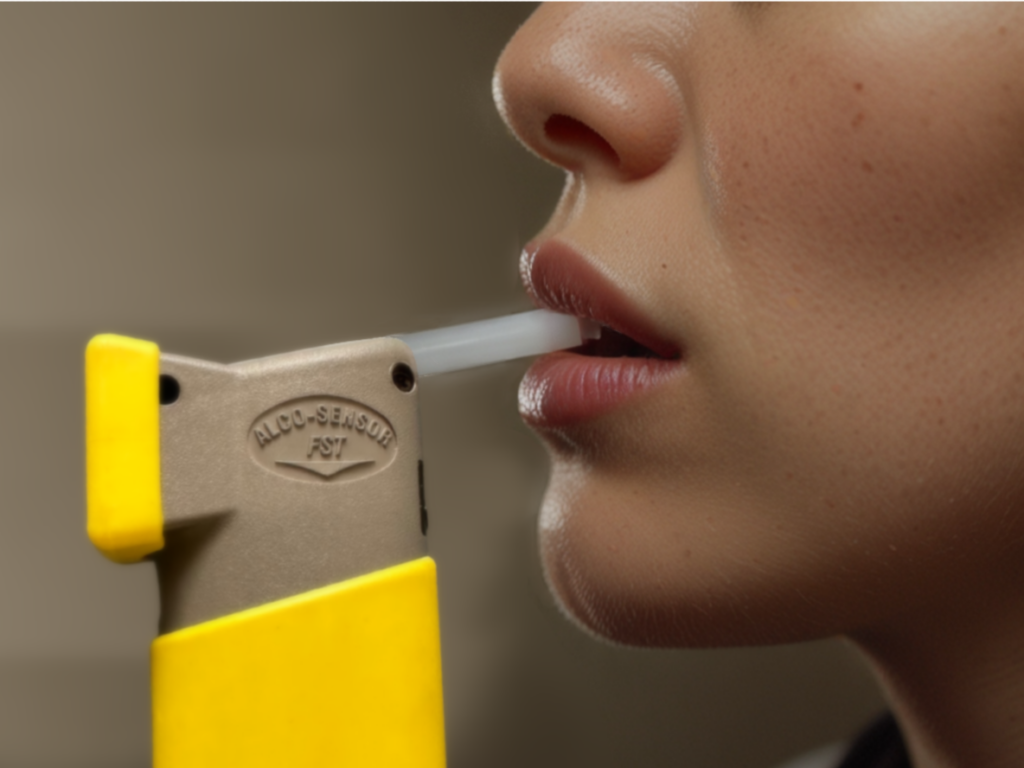
The device performs the same function as the BAC Datamaster, i.e. analyzing the alcohol content in breath exhaled into the instrument and then calculating a blood/alcohol concentration. But this unit employs 2 methods of analyzing the sample. Like the BAC Datamaster, the device has an infrared sensor to measure the diffusion in a chamber containing a captive sample of breath. It also has an electrochemical fuel cell, like the Alco-Sensor IV to provide a second quality check.
The reason that this is considered an advancement is because infrared analysis cannot always differentiate between alcohol and other interfering chemical compounds. The electrochemical fuel cell devices are not known to mistake interfering substances with alcohol.
You can expect a news report about this in the coming days. When the BAC Datamaster was introduced in the mid 90s, the police in BC gave interviews in which they claimed that their new device was infallible, that you could not question the readings and that it would eliminate all doubt in “over .08″ cases.
The police will claim that this new device is the ultimate machine. And they made the same claims about the previous breath-testing instrument. What they will not tell you is that in 2008 we identified and made public a problem with a valve in the BAC Datamaster. It is mentioned in a newscast here.
If you Google Paul Doroshenko BC Breathalyzers you will get a few hundred hits about problems we identified with fuel cell devices.
Despite the problems with the BAC Datamaster, it is very rare that a malfunction leads to an acquittal. Usually an over .08 charge is thrown out due to the police violating Charter rights, or not following the correct procedure in conducting their investigation. So in our view there is no justification to replace the BAC Datamaster at this time, particularly when our government claims that it does not have the money to properly fund the courts and legal aid.
We all get excited about getting a new toy. We can understand why the police are delighted about a fun new device. But it is expensive and this is our tax money they are spending. It would be nice to see them explain how many cases were unsuccessful at trial because of a failing of the BAC Datamaster. We doubt that more than a dozen cases turned on this issue in the last decade in British Columbia.
And of course, you read it here first: this device will also have problems. It may take a decade to identify the significant problems, but it is a truism that there is no perfect machine. Simply put, the new instrument is likely an improvement. But like any device, it can malfunction.
As a defence lawyer we cannot get these devices until they have been in service for a number of years, so it will be some time before we can examine the Intox EC/IR II, take it apart and figure out the potential problems. When we get one, it will probably take us a couple of months of looking at it and thinking about it before we find the weaknesses.
In any event, we doubt very much that it will have an impact on the conviction rate. Despite what the police may claim, it is simply another instrument that is very similar to the last. Both are designed to present the results in a manner that makes them look objective and reliable. Both are usually correct, infrequently incorrect and may not provide you with the information to say whether it is correct on a specific occasion.
Here are some links if you want to read further:
- Breathalyzer Accuracy and DWI/DUI Conviction Rates
- British Columbia Police Equipment Malfunctions
- Police documents question accuracy of B.C. breathalyzers
News-Packed Start to the Week
Monday was a big news day and so we have a lot to cover. We’ll start with the big Government flip-flop.
Right after the Vancouver riot of 2011, the Premier announced that the Government would televise the hearings of those charged with committing offences during the riot. From our perspective it was a poorly considered policy made purely for political gain.
We had a number of concerns. Firstly, we had people contact us who may be suspects in the riot who were unwilling to present themselves to the police bearing in mind that the Government was threatening to broadcast their trial. Of course, no one wants that degree of humiliation as punishment for a few moments of beer-fueled stupidity. Others asked whether they could ever get a fair hearing in light of the Government’s position. There was little that we could do to assuage these fears.
We were concerned that the search for the truth would be hampered by the reluctance of witnesses to step forward both for the prosecution and the defence.
We were also concerned for the privacy and security of all parties, including the prosecutors and witnesses. There have been cases of criminal acts committed under the guise of vigilante justice. Bearing in mind the strong feelings expressed in the immediate wake of the riot, we are concerned for the safety of the people investigated and charged, their families and friends.
Finally, we felt that this was an attempt by the Government to dissuade lawyers from acting for the people accused. It is true that we would prefer to deal with the pressing matters in a given case and not have to face the inevitable distraction that would arise when TV cameras are pointed in your face.
On Monday the Government ran into a roadblock when the Court considering the first application to broadcast a sentencing hearing dismissed the Government’s application. The Court found that there was insufficient information provided to address certain specific concerns, some of which are mentioned above, and that it was inappropriate to adjourn the hearing to make further investigation.
Most interesting is how the Government responded to the ruling. Within a few hours, the Government pulled back — flip-flopped and dropped their plan to broadcast riot trials.
The Court decision was not an outright rejection of the Government’s application. So it is interesting that they gave up so quickly. What first came to our minds was that this was an opportunity to back away from a poor policy decision. We think that it was a poor policy and a poor political decision, so the Government was merely looking for an out and they were handed one by the ruling of the Court.
The Court rejected the assertion that the Government’s request was politically motivated. We did not think this mattered in any event. The passing of laws and policies are to fulfill political purposes — to show the voters that any particular government is doing a good job and therefore deserves re-election. We accept that governments can enact laws and make policies, so long as they comply with the constitution. If the citizenry dislike the laws put in place by the existing government, they can replace the government at the next election.
Our current provincial Government appears on track to be replaced in the next general election. It seems that the many flip-flops (HST, IRP, RiotTV) have greatly damaged the credibility of the Government. This is how it works in a democracy.
People who run for office and end up part of the Government do so because they want to do a good job for the people of their constituency. It does not mean that they have the skills, knowledge, or background to do a good job. And even if they do, unanticipated headwinds can make progress impossible.
In any event, we applaud the conviction of anyone who makes the decision to run for office. And we debate their proposals, accomplishments and criticize them for their short-sightedness, ineptitude and failures. And we think the Government was right to back away from broadcasting riot hearings, even if it means that they take criticism for the flip-flop.
Vic Toews
We do not think so highly of Vic Toews. He is the Federal Public Safety Minister, the Ottawa equivalent of the Solicitor General. In debate Monday about proposed legislation that would compel internet providers to hand over information to police on demand and to maintain information about each step you take on the internet, Toews asserted that people who oppose the legislation “stand with” child pornographers.
This is stupid and it debases Parliament. Moreover, it is defamatory to everyone who dares question proposed legislation. Unfortunately, this particular type of smear has been very effective for the Federal Government.
A flip flop may be the right thing to do. Dirty-smear tactics, i.e. a baseless allegation linking someone to criminal activity for a political purpose simply because they oppose some legislation, is wrong in every way.
Osoyoos Times Editor Apologizing to the RCMP
We have been following a story for a few days now concerning an RCMP stop of the editor of a newspaper in Osoyoos. The editorial was scathing and in our view quite arrogant. The officer was singled out and alleged to have behaved in an unprofessional manner when stopping this fellow and conducting a drinking-driving investigation.
We were somewhat cynical about his version of events. The RCMP published a response fairly quickly which we linked to on our twitter account. The editorial was removed. The editor has now apologized and retracted his statements.
We do not expect the police to be perfect. In our society the police are held to a particularly high standard. Along with this, however, is significant ascribed status. Generally people seem to respect police officers merely because of the fact of their occupation.
In our view the police often seem to expect more respect and deference than they deserve or is healthy in a free society. And we have observed all sorts of discreditable conduct by the police (first hand and on video or in police reports). And then we all know of the matters that have been in the news over the years.
But it is absolutely inappropriate, wrong and unfair in our view to single out a police officer in such a manner when he or she is properly doing their job. This particular attack on the officer was completely unwarranted. And it was a particular type of smear.
So it was appropriate for this newspaper editor to flip flop, apologize and try to fix the damage.
Epilogue:
There is a lot we did not get to in this post. An Ontario Court refused to follow a minimum sentence prescribed by law because it amounted to cruel and unusual punishment; an RCMP officer on trial in a hit and run accident causing death where there is clear evidence he was drinking may have used tactics he learned in his training to obstruct the investigation; and Court backlogs are putting serious cases in jeopardy. We may get to some of these topics in the next few days.
What we wanted to make clear is that there are times when speaking up to oppose the government or authorities is the right thing to do, and governments can be wrong, and it is better to admit certain mistakes and deal with them than allow the mistake to cause further damage.
In certain situations flip flops are just fine.
7-Day Extension Update
When the OSMV (Part of the Ministry of Solicitor General) stopped rendering decisions on all letters requesting an extension of the 7-day review period to file for an IRP review, we filed a Petition to get a mandamus order from Court forcing them to start rendering decisions. When the Attorney General’s office contacted us to discuss the matter, we learned that the OSMV on their own initiative simply stopped rendering these decisions, denying all of the applicants their right to have their matter considered. As far as the Attorney General’s office was concerned, the OSMV needed to get back to the job. So the Attorney General’s office gave the OSMV those instructions.
We often wonder how this type of information is communicated between ministries. We also wonder if anyone in the OSMV cares about the fact that people have a right to have their matter considered or whether it is simply an issue of how they can prevent people from challenging their 90-day IRP.
In any event, the OSMV apparently ignored those instructions for as long as they could. Then we started filing numerous Petitions. We started to file for every client who had requested an extension of the 7-day period to file to dispute their Immediate Roadside Prohibition. The Attorney General’s office called back to say that we were not permitted to put a number of our clients together in one action. We said we do not care — the OSMV is not doing their job so lawyers for the Attorney General can come to Court and explain it and make their argument about us lumping our clients together on one Petition.
Then the OSMV started folding their tent.
Late last week we started receiving decisions and we received reports from other lawyers telling us that suddenly they were now getting their decisions also. So now we can file Petitions to suspend the interlock and Responsible Drivers Program for our client’s who missed the 7-day period to file for an appeal of their IRP for blowing Fail.
A disturbing thing in our view: the Attorney General and the Solicitor General are at this time the same person. And now the Government has announced that they are merging the two ministries.
An Aside:
We have set election dates in British Columbia so we will have a new Government in May 2013. Right now it looks like the NDP will form the next Government.
It seems to us that our current Premier and the Solicitor/Attorney General do not understand the role of the two ministries and the reasons that they need to be separate.
We hope that the next Premier will select more appropriate candidates to operate what should be two separate ministries. With only two years of college and no legal education, the current minister does not have the educational prerequisites to apply for the jobs at the Attorney General’s ministry. The best she can claim to assert her qualifications is that she is an outsider and will therefore have a fresh perspective.
This is an argument that will not go very far if you are applying to be the head of a surgical team, i.e. “I have no skill as a surgeon and I have no history of working in an operating room, but I have fresh ideas so let me decide about how we will conduct this operation.”
In our view, the Attorney General lacks the formal education which should be a prerequisite to hold the position.
ICBC Advice
Over the past few weeks we have received a number of calls from people seeking clarification about what they were told by ICBC or the Office of the Superintendent of Motor Vehicles.
We have heard reports of people who have called ICBC or the OSMV and were informed that they can attend at ICBC and pick up their drivers licenses without installing the Interlock or taking the Responsible Drivers Program. When they actually get to ICBC, however, they find out that this is untrue and are asked to pay to register in these programs.
The advice people are given is inappropriate. Agents at ICBC are not in a position to give individuals legal advice. Many people have told us that they walked into an ICBC Driver Services Centre with the intent to seek a review of a driving prohibition, and walked away having been discouraged from doing so by someone working at ICBC Driver Services. Some individuals who had legitimate defenses to ADPs and IRPs were told that they cannot succeed with their dispute by someone at Driver Services.
It is unclear to us why some at ICBC are giving people false or misleading information. Unfortunately, the fallout from this is that we now are in the position where we must instruct our clients not to deal with ICBC on their own and not to rely on what ICBC is telling them.
What is worse is that many people who had stays of their driving prohibitions pending the Sivia decision are being misinformed by ICBC. For individuals who failed or refused to provide samples, the Attorney General’s office is no longer consenting to stays of the prohibition. Individuals whose interim stays have expired on February 7, 2012 are attempting to turn in their licenses. ICBC is informing them that they are still able to drive. This is not the case. The Court order granting the interim stay has expired.
The concern here is that the incorrect legal advice being given from ICBC puts people in jeopardy. They are no longer able to drive, because they are prohibited from driving. If they are caught driving, they risk facing Driving While Prohibited charges.
If you have received advice or information from ICBC regarding your driving prohibition, and are concerned that it may be inaccurate, please contact us. We are experienced in dealing with these cases and are familiar with the law as it is changing and evolving.
Port Moody ASD Update:
A while back we broke the story that Approved Screening Devices used by the Port Moody Police Department were not being calibrated properly. As a result of our having gone public with this information, the Port Moody Police announced that they had an external unit investigate their actions. They never acknowledged that there was a problem.
We wanted to know more. So we made a Freedom of Information Request to the Port Moody Police asking for all the information they had about the steps they had taken to address the problem. We received an incomplete but nevertheless enlightening response in January.
The information that was disclosed to us as a result of our request was largely censored. Entire pages of material were blacked out. It makes you wonder what they have to hide this point in time.
The Port Moody Police claim that they are entitled to withhold this information because it is the subject of a Police Act complaint. But our concern is that these records are necessary for people who received IRPs to deal with their cases in Court. What records we were able to inspect confirm many of our conclusions about ASDs and the information that is forwarded to the Office of the Superintendent of Motor Vehicles.
When we made submissions to the Superintendent’s office about the calibration issue in Port Moody, the response was dismissive — that they had not heard anything about the problem. In late December a reporter from CTV asked the OSMV if they had any information about problems with ASDs. They said that they had never received any information in that regard from any police force. The records we received indicate that not only was the Superintendent’s police liaison alerted to the issue, but that the OSMV was addressed with specific regard to the calibration problem. So to us the impression is that of a poorly choreographed cover-up.
What was also confirmed for us is the fact that the failure to follow proper calibration procedures had a definite impact on the accuracy and reliability of the ASD test results. In calibration tests performed after the error was identified and the method corrected, devices were popping up out of calibration. One device had to be tested and re-calibrated five times. Another device was put through five attempts before the officer in charge of calibration gave up and took the unit out of service.
It seems that overusing the simulator solution impacted these devices, some to such a degree that they could not be recalibrated. This is chilling news for many of our clients and many residents of Port Moody who received IRPs using these devices. How many innocent people are now out of pocket in excess of $5000 because of this mistake? Why did the OSMV deny knowledge of the problem?
We are not done looking into this issue. We have asked the Office of the Information and Privacy Commissioner to investigate the records and to determine whether they should be disclosed to us. Our goal is to get every piece of information to which we are entitled in the hopes that we can right some of the wrongs the IRP scheme has caused.
The Port Moody Police have indicated that the investigation will not be completed until April. This is ridiculous. The material disclosed indicates that they know precisely what the problem was and that we were absolutely accurate in our assertion. They know that they calibrated the devices incorrectly. If we did not publicize it, they would have never known about the problem. There is no reason to wait to release this to the public except to try to bury the story or to assure that everyone who got an IRP in Port Moody must suffer despite the police screw-up.
Are the Port Moody Police protecting the public or themselves? As a taxpayer how do you feel about paying for 6-month investigation to uncover the information that we sorted out in less than 30 minutes?
Traffic Violations and Your Driving Record
Many people do not realize the impact that a traffic ticket can have on their driving record. A Novice or Learner driver, in particular, is at a great risk for having a license suspension with even one driving infraction.
The Office of the Superintendent of Motor Vehicles has the power to suspend the driver’s license of any person if it is of the opinion that the driving record is unsatisfactory and a prohibition is in the public interest. This broad power is to be used at the discretion of the Superintendent. This means that any time you receive a conviction for a traffic violation on your driving record, your file may be marked for review and you may receive a Notice of Intent to Prohibit or Notice of Prohibition.
Certain driving offences inevitably trigger a prohibition. For example, all Class 7 drivers receive an automatic driving prohibition after they are issued a 12 or 24 hour suspension for alcohol.
In many cases this is problematic. Although a driver may not have enough alcohol in his or her blood to register a “WARN” on an Approved Screening Device, the Superintendent still issues a lengthy prohibition. Although these drivers allegedly have a lower blood alcohol reading, they are given a lengthy, harsher punishment.
Moreover, the ASD is being used to form the basis for a punishment. And not just one punishment, in the case of N drivers, but two — the 12-hour prohibition and the 3-month suspension. Our feelings on the use of the ASD to trigger punishment are quite clear: it is a Charter violation.
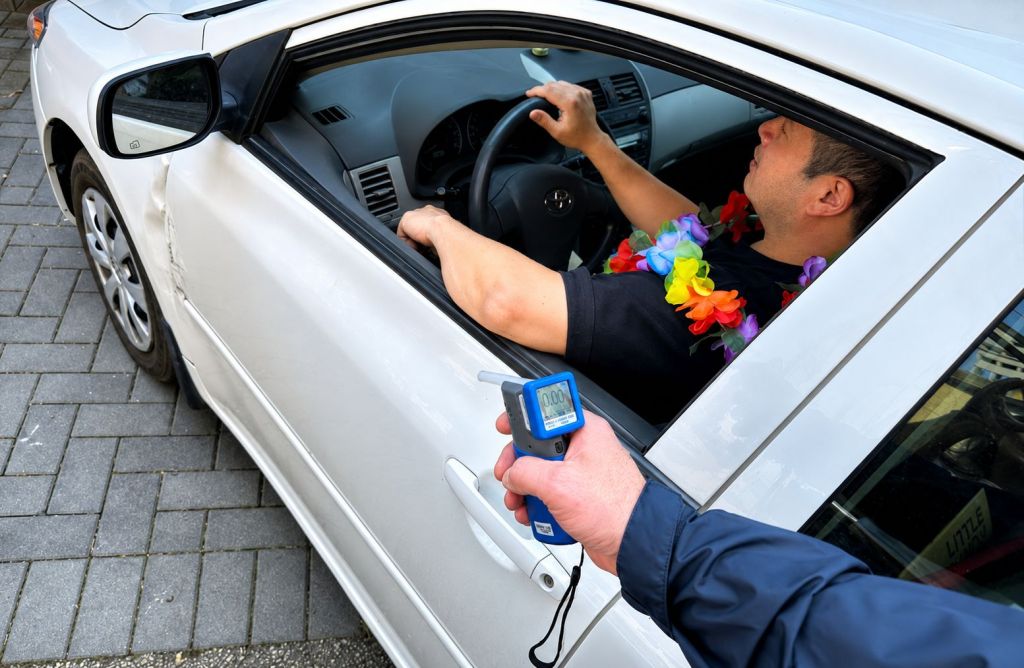
Although the Superintendent has a zero-tolerance policy for alcohol and learner or novice drivers, the ASD is simply an ineffective way to enforce this policy. Calibration, device temperature, and residual mouth alcohol, even from innocuous sources like soy sauce, can all play a role in registering a reading on the device.
A 12 or 24-hour prohibition addresses the interests of public safety by removing a driver from the road. For many people, the 12 or 24-hour prohibition serves as a wake-up call and a lesson about drinking and driving. Imposing a further 3-month prohibition based only on the fact of the 12 or 24-hour prohibition, with no inquiry into its validity, is excessive in our view.
And the way it is being applied to all drivers of this class raises serious concerns about whether the discretion of the Superintendent is being inappropriately fettered.
If you receive a Notice of Intent to Prohibit, we can help you address the prohibition. Give us a call.